
A framework for how programming-based networks design, coordinate, and sustain the relationships that drive outcomes and build relational intelligence
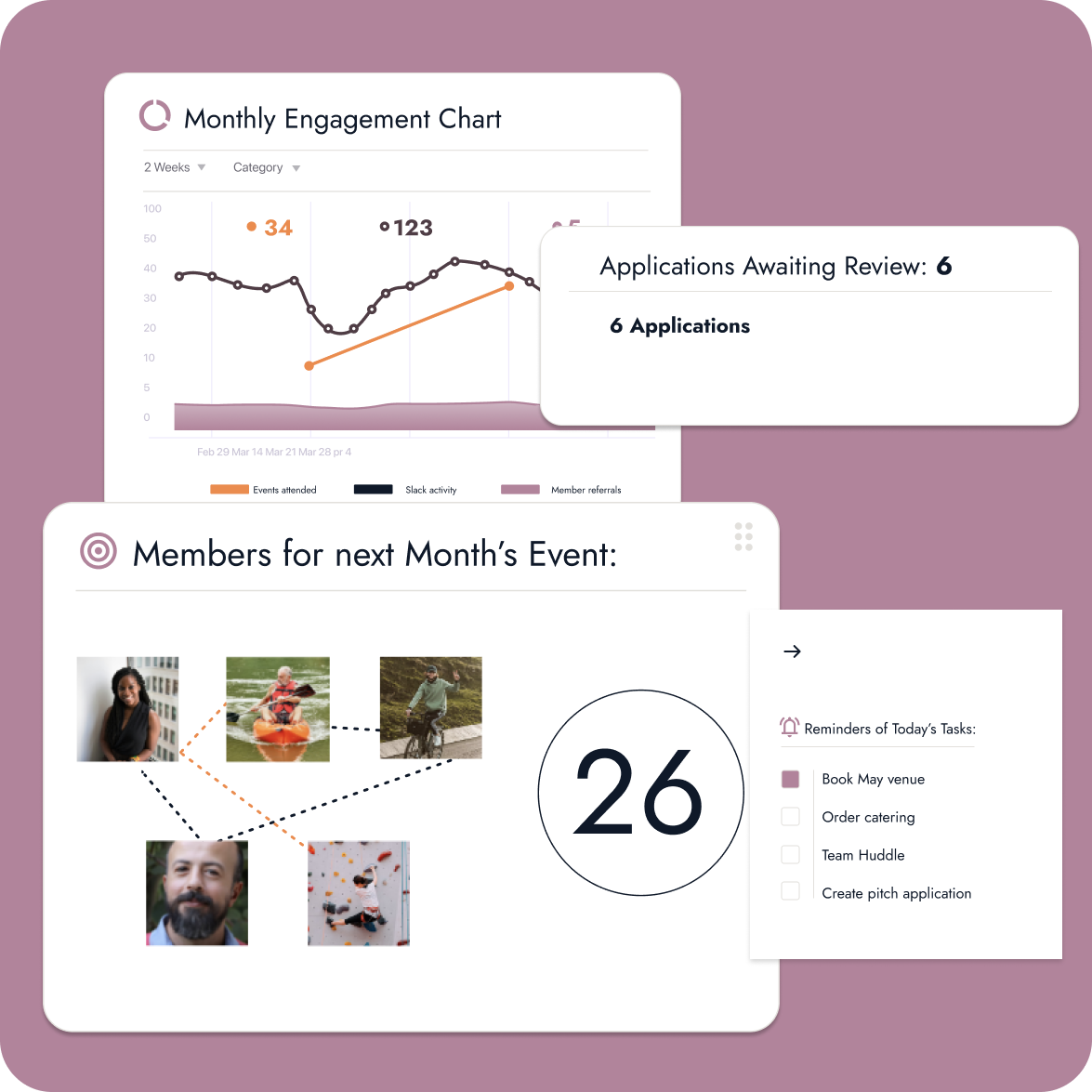
RELATIONAL PROGRAM INFRASTRUCTURE™ — DEFINITION
The systems, processes, and design principles that allow programming-based networks to build, coordinate, and sustain meaningful relationships across multi-faceted stakeholder groups over time and at scale.
Applied to universities and entrepreneurial programs: this is the system and tools necessary to deliver experiences and drive meaningful relational value across students, alumni, faculty and mentors.
Most entrepreneurship programs are well-designed for delivering experiences. Cohorts move through structured curricula. Events bring people together. Demo days mark progress.
What most programs are not well-designed for is what happens in between and what happens after. The sustained connections between students and mentors. The alumni who stay engaged because the program continues to be relevant to where they are now, not just where they were. The peer relationships that develop across cohorts. The staff capacity to coordinate all of it without burning out.
These outcomes don't emerge from programming alone. They emerge from infrastructure: the underlying systems that determine how people connect, how those connections are maintained, and how the program learns from and builds on them over time.
Relational program infrastructure is the term for that layer. More than just a product category, it is a design philosophy and an operating model to help build relational intelligence, one that a growing number of entrepreneurship centers are moving toward, often without a common name for what they are building.
The absence of relational infrastructure is not a new problem. Program directors have always known that relationships drive outcomes. What has changed is the scale and complexity of the communities they are trying to support.
A center with three active cohorts and a decade of alumni has a network of hundreds or thousands of people. The tools most programs use to manage that network - CRMs, spreadsheets, shared databases, were designed for other purposes. They track contacts. They log activity. They do not actively support the relationships within the network or keep pace with how those relationships evolve.
The result is a structural gap between what programs care about and what their systems support. Alumni disengage not because they stop valuing the community, but because the community stops showing up for them in relevant ways. Mentors participate inconsistently not because they are unwilling, but because the friction of staying connected is too high. Staff spend increasing time on manual coordination that should be handled by systems.
Programs invest heavily in the experiences they create. Relational program infrastructure is the investment in what those experiences leave behind.
Programs operating with relational infrastructure in place share four design principles. These are not features of a particular tool, they are characteristics of how the program is structured and how it operates.
1. Relationships are the primary unit of design
Engagement is not treated as a byproduct of programming. Programs intentionally define which relationships matter: student to mentor, peer to peer, alumni to current student, and design systems around supporting those specific connections. The question is not only 'what experiences are we creating?' but 'what relationships are we building, and how do we sustain them?'
2. Profiles reflect where people are now, not just where they were
In a traditional CRM or database, a person's record reflects what was entered when they enrolled or last updated their information. In a program with relational infrastructure, profiles stay current, drawing on publicly available information, stated goals, and activity patterns to reflect where someone is in their career and what they need right now. This is the difference between a static contact record and a living participant profile.
3. Matching is systematic, not manual
In most programs, matching (connecting students with mentors, peers with collaborators, alumni with opportunities) depends on a staff member knowing the network well enough to make relevant introductions. This works at a small scale and breaks down as the community grows. Relational program infrastructure supports matching through defined criteria, stated goals, and staff input, reducing the dependency on any single person's institutional knowledge.
4. The program stays relevant between interactions
A passive system requires people to come to it. A program with relational infrastructure surfaces relevant content, connections, and opportunities to participants based on who they are and where they are in their journey, without requiring them to seek it out. This is what keeps alumni engaged after cohort completion and what makes the program feel like an ongoing resource rather than a past experience.
Clarity about what this framework excludes is as important as what it includes. Relational program infrastructure is not an event management system. Events are experiences, valuable but episodic. Infrastructure is what supports the relationships that events initiate.
It is not a traditional CRM. CRMs are designed around pipeline logic, moving contacts through defined stages toward a transaction. A university entrepreneurship community is not a pipeline. Alumni do not convert. Relationships do not close. The logic is fundamentally different.
It is not a messaging or community platform. Tools like Slack or Circle support communication within a community. They do not provide the structured relationship layer (profiles, matching, longitudinal visibility) that infrastructure requires.
And it is not a replacement for programming. Curriculum, workshops, mentorship sessions, and demo days remain the core of what a program delivers. Relational infrastructure is what ensures those experiences compound over time rather than remaining isolated events.
Infrastructure doesn't replace the program. It ensures the program keeps working after everyone goes home.
The shift from a program without relational infrastructure to one with it is visible in several specific ways.
Alumni engagement stops being an initiative and becomes a condition of the program. Rather than periodic re-engagement campaigns, alumni participation is sustained by a program environment that continues to be relevant to where they are, surfacing connections, opportunities, and content that reflects their current career stage, not just their history with the program.
Matching quality stops depending on staff memory. When matching is supported by structured criteria, stated goals, and living profiles, the quality and relevance of introductions improves, and the volume of matches a program can facilitate scales without requiring proportional increases in staff time.
Institutional memory survives staff transitions. In programs that rely on manual coordination, a significant portion of the relationship knowledge lives with individual staff members. When that person leaves, the knowledge leaves with them. Infrastructure externalizes that knowledge, making it accessible to whoever runs the program next.
Outcomes become visible over time. Programs with relational infrastructure can track not just attendance at individual events but the depth and continuity of participation across the network — which relationships formed, which sustained, which alumni remained active and in what ways. This is the data that demonstrates long-term impact.
Relational program infrastructure helps staff build relational intelligence and better harness the power of their network.
Artificial intelligence is not what defines relational program infrastructure; the design principles do. But AI is what makes those principles operationally feasible at scale.
Keeping participant profiles current is one example. A program with hundreds of alumni cannot rely on people to update their own records. AI can draw on publicly available information, including professional profiles, activity signals, and career developments, to keep profiles reflective of where someone is now rather than where they were when they enrolled. The result is a network that programs can actually act on, rather than a database that drifts further from reality each year.
Matching at scale is another. Identifying relevant connections across a large network, accounting for stated goals, expertise, career stage, and program context, is a task that exceeds what any staff member can reliably perform manually. AI-assisted matching surfaces connections that would otherwise be missed, not replacing human judgment, but extending its reach.
Content relevance is a third. Determining what each participant should see (which opportunities, events, and connections are worth their attention right now) requires understanding who they are and what they need at this point in their career. AI makes personalization at the individual level feasible in a way that manual curation cannot.
The through-line is that AI handles the operational complexity of maintaining a dynamic, living network, freeing program staff to focus on the relationships and decisions that require human judgment.
Program directors searching for solutions to these problems typically start with CRM queries, because CRM is the closest familiar category. Others land on community platforms, matchmaking tools, or alumni engagement software.
Each of these categories captures part of what relational program infrastructure involves. None of them captures the whole, because none was designed with this specific context in mind: a community that spans roles, cohorts, and years, where the goal is sustained connection rather than conversion.
Relational program infrastructure is the term we use at Nunchi to describe the full operating model: the design principles, the systems that support them, and the outcomes they make possible. It is not a product name. It is a description of what the best entrepreneurship programs are building, and what we believe every program should have access to.
Nunchi is built specifically for university programs and networks. It operationalizes the four principles of relational program infrastructure through three core capabilities:
Together these capabilities allow programs to function as ongoing, dynamic networks rather than recurring events, sustaining the relationships that drive the outcomes programs actually care about.
If you're running a university entrepreneurship program and want to see what this operating model looks like in practice, we'd welcome a conversation.